Every summer, the NBA rumor mill kicks into overdrive.
Fans debate which team should land the biggest free agent. Analysts dissect salary caps, championship windows, coaching styles, and roaster construction. The assumption is almost always the same:
Sign the superstar, and everything else will fall into place.
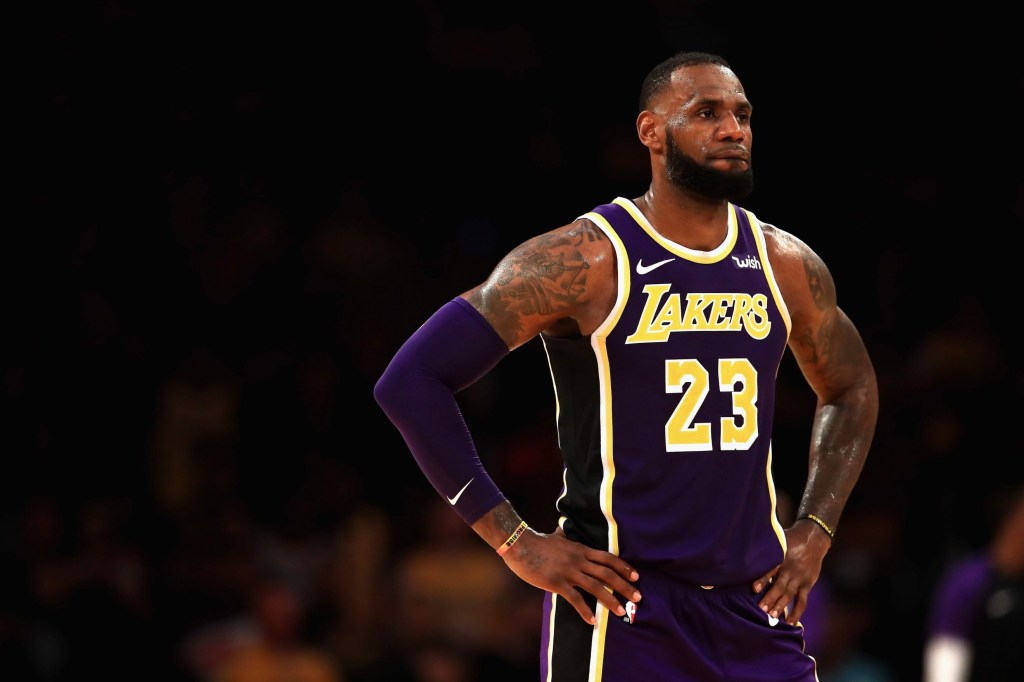
But history has shown us that’s rarely how championships are won.
Even LeBron James—one of the greatest players to ever step on to the court—has ever won a title by himself. Championships require more than star power. They require chemistry, systems, role players, coaching, and a team that knows how to execute the fundamentals.
Oddly enough, I see marketers making the same mistake every day.
The Marketing “Super Team”
Over the past 25 years, I’ve watched brands enthusiastically chase the next big thing.
First it was marketing automation.
Then AI.
Then Customer Data Platforms (CDPs).
Then real-time personalization.
Then predictive analytics.
Then Next Best Action.
The technology changes. The pattern doesn’t.
Companies spend hundreds of thousands—sometimes millions—on sophisticated platforms, expecting them to transform customer engagement overnight.
Then, implementation begins.
And that’s when reality shows up.
The data isn’t clean.
Customer journeys don’t exist.
Segmentation is limited to “active” and “inactive”.
Reporting is inconsistent.
Nobody agrees on what success actually looks like.
The platform didn’t fail.
The foundation did.
You Can’t Automate Strategy That Doesn’t Exist.
One of the biggest misconceptions in CRM is that advanced technology creates advanced marketing.
It doesn’t.
It amplifies whatever already exists.
If your customer data is fragmented, AI will work with fragmented data.
If your segmentation is weak, personalization will be weak.
If your lifecycle strategy doesn’t exist, automation simply helps you send mediocre experiences faster.
Technology doesn’t create marketing maturity.
It exposes it.
Crawl. Walk. Run.
One of the most valuable lessons I’ve learned throughout my career is knowing when an organization is ready for the next level—and when it’s trying to skip a few steps. And, if you’ve partnered with me before, you’ve likely heard me prioritize strategies and tasks based on the following as well.
Crawl
Before you invest in sophisticated technology, ask yourself:
– Is our customer data reliable?
– Do we have a strong welcome journey?
– Have we built meaningful lifecycle campaigns?
– Are we segmenting customers beyond basic demographics?
– Can we confidently measure success?
These aren’t glamorous questions.
They’re championship questions.
Walk
Once those fundamentals are in place, the opportunities become much more exciting.
Behavioral triggers.
Dynamic content.
Cross-channel orchestration.
Preference centers.
Continuous testing.
Now your marketing engine has enough structure to support more sophisticated experiences.
Run
Only then does it make sense to invest heavily in capabilities like:
– AI-powered recommendations
– Predictive churn modeling
– Real-time decisioning
– Customer data platforms
– Hyper personalization
At this stage, technology isn’t compensating for weaknesses.
It’s accelerating strengths.
Don’t Sign LeBron Before You’ve Learned the Playbook.
Imagine signing the greatest player in the world while the rest of the team still struggles with basic ball movement.
No coach would build a championship roster that way.
Yet brands do the marketing equivalent all the time.
They expect enterprise technology to solve organizational problems.
They hope AI will compensate for missing strategy.
They assume personalization software can fix a lack of customer understanding.
It can’t.
The best technology in the world can’t replace clear objectives, thoughtful customer journeys, disciplined testing, and a team that understands its customers.
Maybe that’s why I’ve become such a Jalen Brunson fan.
Anyone who knows me knows my love for the Knicks borders on obsession. (Okay…maybe it crossed that line years ago.)
As much as the basketball world has spent this summer debating where LeBron James might end up, I’ve found myself appreciating something different: what Jalen Brunson has already built in New York.
Yes, he’s an incredible player. But what makes him special isn’t just the points he scores—it’s how he elevates everyone around him. He leads. He creates trust. He makes his teammates better. He bought into the system, and in return, the system became better because of him.
Oddly enough, that’s exactly how I think about great CRM.
The best technology isn’t the hero of the story. The best strategy isn’t either.
It’s the combination of people, process, data, and technology—all working together—that creates something greater than the sum of its parts.
Those fundamentals aren’t exciting.
But neither are layup drills.
Championship teams still practice them every day.
Don’t Sign LeBron Before You’ve Learned the Playbook.
The Real Competitive Edge.
They hope AI will compensate for missing strategy.
They assume personalization software can fix a lack of customer understanding.
It can’t.
The best technology in the world can’t replace clear objectives, thoughtful customer journeys, disciplined testing, and a team that understands its customers.
Those fundamentals aren’t exciting.
But neither are layup drills.
Championship teams still practice them every day.
The Real Competitive Advantage.
I’m not suggesting brands should avoid AI, CDPs, or advanced personalization.
Quite the opposite.
I’ve spent much of my career helping organizations implement these capabilities because, when the foundation is there, they’re incredibly powerful.
The mistake isn’t investing in advanced technology.
It’s expecting advanced technology to replace foundational marketing.
The brands that consistently outperform their competitors aren’t always the ones with the biggest technology budgets.
They’re the ones that mastered the basics before chasing the next shiny object.
Just because you can sign LeBron doesn’t mean you’re ready to win a championship.
The same is true for your CRM strategy.
Your Takeaway.
Before your next MarTech investment, ask yourself these three questions:
1. “If we bought this tomorrow, are we operationally ready to use it?”
2. “Are we trying to solve a technology problem or a strategy problem?”
3. “Have we truly mastered the fundamentals, or are we hoping this platform will do it for us?”
Because championship teams aren’t built by collecting superstars.
They’re built by mastering the fundamentals first.

